

to be consumed, bones and all!
cannibalism and the all-consuming emotional hunger for love and intimacy in bones and all

Spoiler Warning: This essay contains major spoilers for Bones and All (2022), directed by Luca Guadagnino. Proceed with caution.
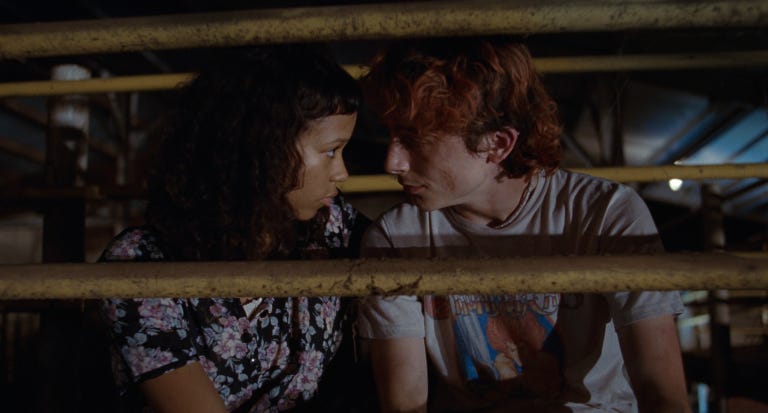
In Luca Guadagnino’s Bones and All (2022), cannibalism serves as a metaphor for the emotional hunger that drives its characters, Maren and Lee. Their journey is one of intense yearning, caught between a desire for normalcy and the violent impulses they struggle to control. Through this, Guadagnino delves into themes of trauma, identity, and the cyclical nature of violence.
The film intricately ties emotional and physical hunger, creating a narrative where love, intimacy, and destruction are all bound together. Bones and All explores the dire need to be understood and how that need shapes us in complex, often destructive ways.
who are you, really?
the search for identity and connection
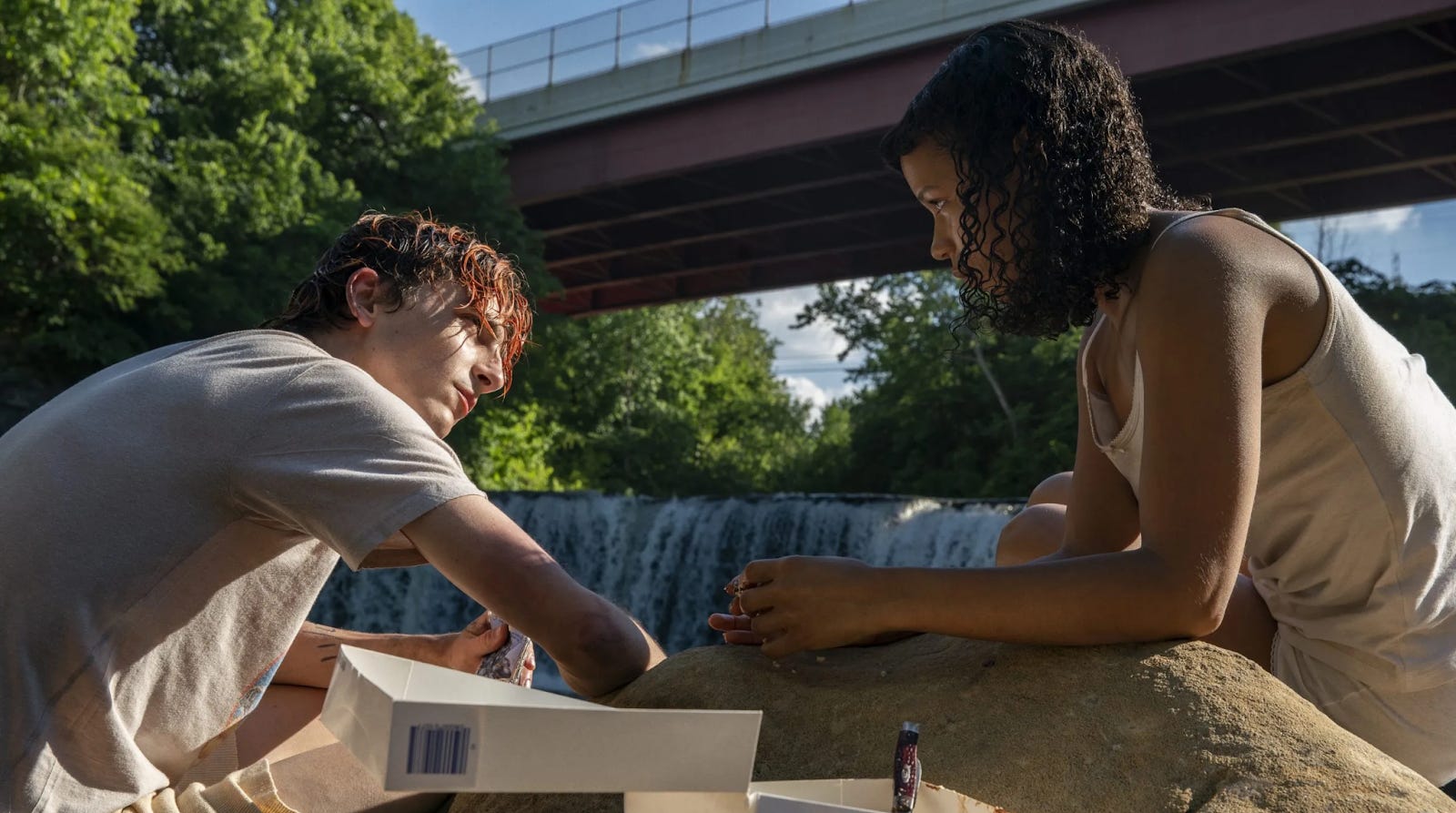
The instinctual attraction between Maren and Lee is portrayed as an almost primal connection. They smell each other, sense each other’s proximity, and in doing so, find a reflection of themselves in the other. It feels almost otherworldly. This bond is rooted in both their shared trauma and their cannibalistic instincts, creating a complex dynamic where their desires for connection and consumption are intertwined.
It’s a connection that goes beyond mere attraction, it’s an understanding that is felt on an almost animalistic level, where they are drawn to each other not just for what they want, but for what they need, even as they are haunted by the violent impulses that define them.
“You're seeing yourself for the first time, and that's freaking you out. But you know what, it's fucking me up too, okay? I feel like I'm seeing myself too. That's how this works.” - Lee
Maren and Lee’s identities are irrevocably shaped by a generational curse, one that has shaped them in ways they cannot undo. It manifests in their cannibalistic urges. Their fractured sense of self is a direct result of abandonment and isolation, as they are pushed to the margins of society and disconnected from the world around them. It's about being seen, truly seen, for who they are, with all the darkness laid bare.
It’s the heartbreaking desire to have the covers peeled back, to be understood and accepted in spite of or perhaps because of their monstrous nature. Maren and Lee aren’t just fighting their violent instincts; they’re fighting to reconcile the raw, untamed parts of themselves with the deep, unmet need for connection and love that lives within them.
feeding the void
cannibalism as a symbol of emotional hunger
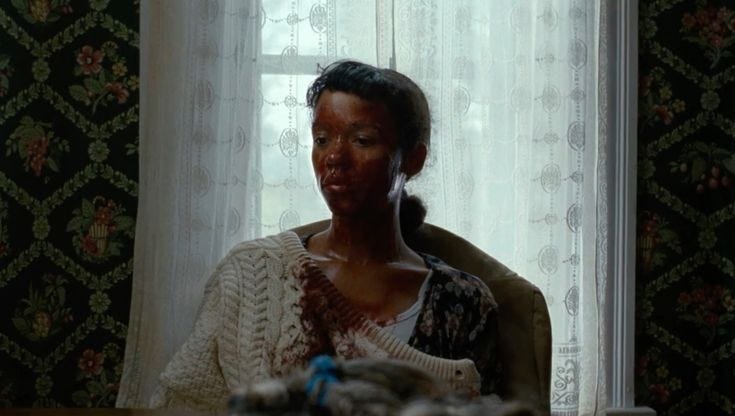
The theme of emotional hunger runs throughout Bones and All, embodied by the cannibalistic acts of Maren and Lee. While their actions may appear outwardly monstrous, they reflect a deeper emptiness, a deep craving for connection and healing that cannot be satisfied through ordinary means. This hunger, born from unresolved trauma, drives them to commit violent acts, though these actions never bring the fulfillment they so desperately seek.
Maren’s journey begins with the trauma of abandonment. Her father leaves her at a young age, unable to protect her from the darker side of her nature, and her mother’s absence further deepens her sense of neglect. Similarly, Lee’s trauma stems from a broken family dynamic, particularly his abusive father.
The violence he perpetuates is not inherent but a reflection of the emotional pain and anger passed down to him through generations. Their violent tendencies are rooted in their pasts, Maren’s stemming from abandonment and Lee’s from abuse. Both characters’ actions are not driven by inherent darkness but by the emotional void they carry as a result of their families’ neglect.
Maren’s need to understand her past and Lee’s defiance against his are both attempts to reclaim control over who they are, rather than be defined by what they’ve been forced to become. This shared sense of abandonment fuels their need for validation, both longing to be seen as more than their hunger. Lee's vulnerability surfaces when he asks, "Do I?... Seem nice?" He projects indifference, but in this moment, he craves reassurance, hoping Maren sees him as more than just what he does.
In Bones and All, cannibalism is more than just a monstrous act, it’s a metaphor for the emotional hunger that both Maren and Lee feel. This hunger, born from deep trauma, drives them to commit acts of cannibalism symbolizing a desperate, insatiable need for something they can never fully obtain: emotional fulfillment.
Yet, despite their efforts, they find no peace. The violence they inflict on others becomes a physical manifestation of the inner void they cannot fill, underscoring the futile nature of their attempts to satisfy an unquenchable emotional hunger.
monsters within, love without
healing, redemption, and the search for a homecoming
Maren and Lee’s relationship represents the possibility of breaking the cycle of trauma and violence that has bound them. It offers a chance for healing, where they can truly be seen for who they are, beyond the labels of “monstrous” or “violent.”
With each other, they find a space to be themselves without judgment, and to experience love without being defined by their past actions. This potential for redemption is central to the film’s exploration of connection and healing.
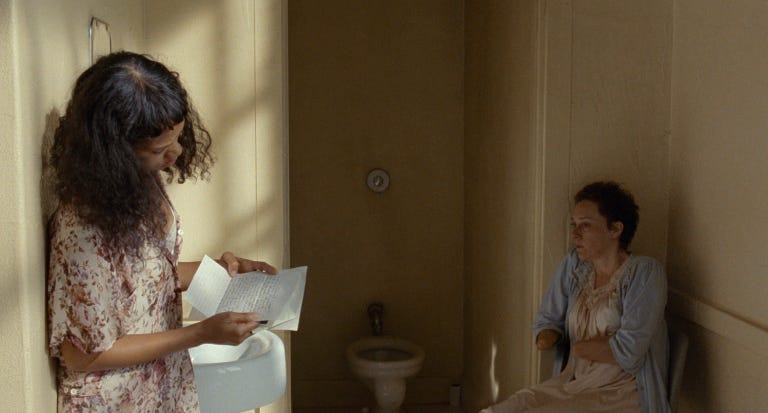
A major component of the film is Maren’s journey to find her mother, whom she has never known, after her father reveals that she inherited this need to feed from her. The film reaches a turning point with Maren finally visiting Janelle, her mother, in Minnesota who committed herself to a psychiatric hospital.
When Maren finds her mother, she discovers she has eaten her own hands in a tragic act of self-destruction. A nurse gives Maren a letter from Janelle, in which she writes that they would all be better off dead than living as monsters. Janelle explains how she felt disconnected from the societal roles of "woman," "mother," and "wife." Her inability to fit these expectations deepens her alienation, and she believes she cannot have love in her current form.
She feared her cannibalistic urges so deeply that she locked herself away, but ultimately, she succumbed to them, sacrificing herself to feed the hunger.
“The world of love wants no monsters in it.” - Janelle
Janelle lunges at Maren, and tries to eat her before being restrained. This encounter leaves Maren devastated, reinforcing her fear that the world may have no room for "monsters."
This statement reflects a central theme of the film. While Janelle’s extreme actions emphasize the physical manifestation of the internal monsters Maren and Lee carry, it also illustrates the deep emotional scars they face. The flaws, traumas, and fears passed down to them shape their behaviour and relationships, pushing them to believe they are beyond redemption.
These internal monsters may not always appear as dramatically as in Maren and Lee’s case, but they still define the choices people make, often leading to isolation and self-doubt. The world may not offer space for these monsters, nor does it provide love to alleviate the pain they bring. However, they remain a part of these characters, shaping their lives in profound ways.
After this encounter, Maren, shaken by her mother’s tragic state, abandons Lee. She believes she cannot escape the destructive cycle of violence and pain that has defined her existence. Convinced that their love may not be enough to break free from the darkness, she leaves.
However, in a moment of deep self-realization, Maren ultimately finds her way back to Lee. He, in turn, accepts her unconditionally, offering the forgiveness and love she so desperately needs. In his arms, Maren finds peace and understanding, proving that despite the darkness of their pasts, their bond provides a space where they can heal, if only for a brief time.
“You Made It Feel Like Home" by Atticus Ross & Trent Reznor, 2022. Audio.
The film’s score by Atticus Ross and Trent Reznor, particularly their song “(You Made It Feel Like) Home,” perfectly encapsulates the fleeting connection between Maren and Lee. The lyrics reflect the brief moments of peace and understanding they share. Lines like “In a world that isn’t ours / In a place we shouldn’t be” express their sense of alienation and the feeling that they don’t truly belong.
The repeated refrain, “For a minute, just for a minute / We made it feel like home,” underscores how their bond offers a temporary escape from their violent pasts. In these moments, they find love and acceptance, symbolizing their desire for normalcy and redemption, even if those moments are short-lived.
the ravage of need
the danger of unchecked emotional hunger
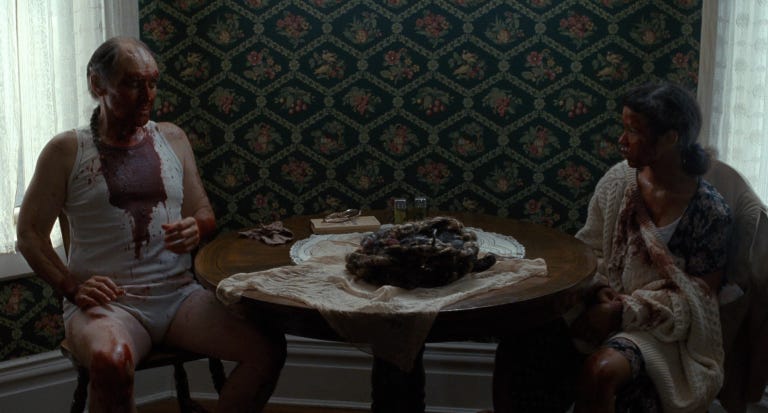
Sully, a cannibal who becomes fixated on Maren, represents the extreme consequences of emotional hunger. His obsession with her stems from his desperate need for connection and acceptance.
Unlike Maren and Lee, Sully’s hunger becomes toxic and consuming, reflecting the dangerous potential of an unfulfilled longing for love and understanding. Sully sees Maren as the only who can "see" him, yet his obsession reveals the destructive side of this emotional need when it's not reciprocated.
Sully's tragic end serves as a cautionary tale.
Emotional hunger, when left unchecked, can evolve into unhealthy obsession. Sully’s fixation on Maren symbolizes the destructive potential of an overwhelming need to be loved and understood. His inability to process his emotional pain and need for connection ultimately leads to his undoing.
When Maren and Lee meet a pair of eaters, they are confronted with a darker, more unsettling side of hunger. One of the eaters casually describes how he consumed a victim's "bones and all," eating them entirely: flesh, skin, and bones. This graphic and disturbing account reveals the extent to which hunger can consume someone when it is no longer tied to a basic need for survival.
Eating a person in their entirety is an act of total obliteration, a complete erasure of identity. This eater has long since stopped seeing other people as humans, they are just something to be consumed. This is a hunger that has spiraled beyond any emotional need and has become a grotesque desire to dominate and destroy.
The second eater takes this darkness even further.
He admits that he is an eater by choice, not necessity. He doesn’t need to feed to survive, he chooses to do it. This admission shocks and disgusts Maren and Lee, whose hunger is born from emotional pain and isolation. For Maren and Lee, there is still a trace of humanity in their actions, even though they are caught in a cycle of violence.
But for this eater, there is no struggle, no internal conflict. His hunger is purely indulgent, a choice made with no moral dilemma or emotional connection. His actions are fuelled by a twisted sense of pleasure, not the deep, gnawing need for love or understanding that drives Maren and Lee.
These encounters force Maren and Lee to face the darkest consequences of unchecked hunger. While their hunger is rooted in the trauma of their pasts and their desperate need for connection, the other eaters represent a far more terrifying version of this hunger.
They have lost any shred of emotional depth or human connection, and their hunger has become a cold, calculated desire to consume, not out of need but out of choice. Their actions highlight the danger of letting emotional hunger grow unchecked, how it can evolve from a longing for connection and understanding into a monstrous desire for control, destruction, and complete annihilation of others.
at the core of flesh and soul
the desire for normalcy and return to humanity
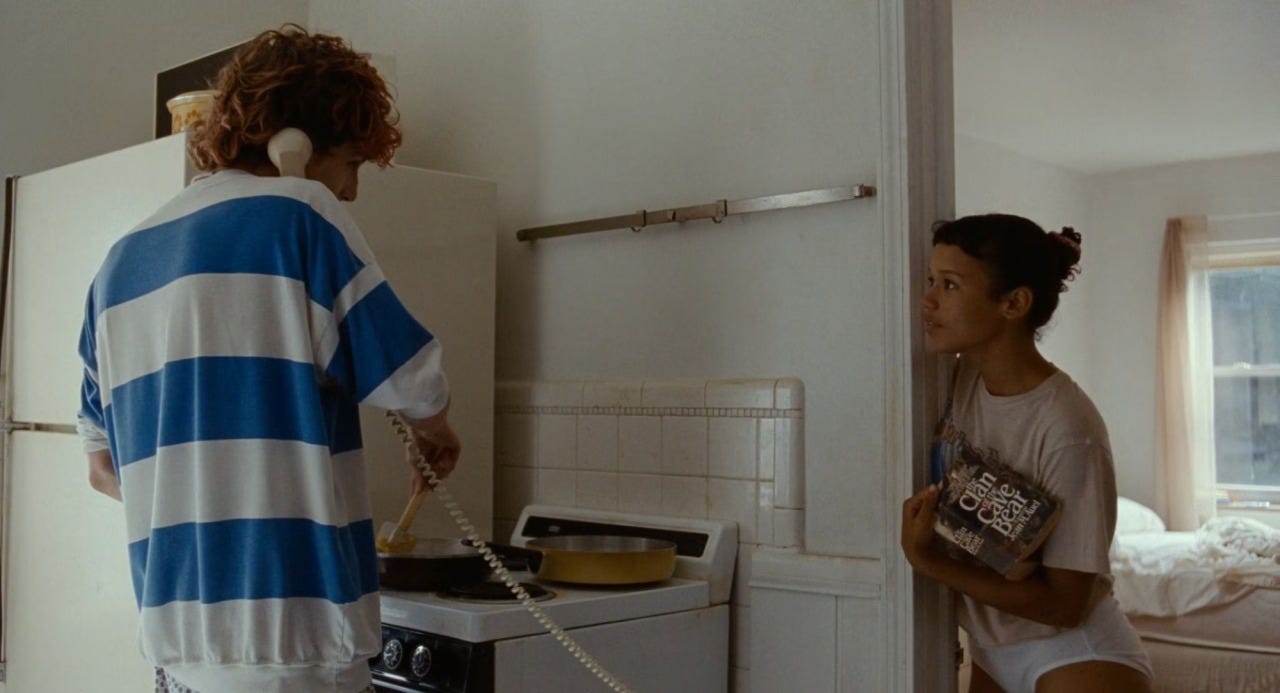
The desire for normalcy is a central theme in Bones and All, expressed through Lee’s simple and profound, yet almost radical plea: “You Want To Be People? Let's Be People.” This simple plea to exist without the need to be anything more, without having to prove worth or importance. It’s a wish to escape the emotional and violent weight of their lives, even if only for a brief moment.
For Maren and Lee, normalcy is an elusive dream, something that, in their traumatic reality, feels just beyond reach. The shared longing for normalcy speaks to their desire to experience peace without the constant presence of violence and the otherness that defines them.
In the world they inhabit, there is no room for "monsters" like Maren and Lee. Society cannot understand their cannibalistic urges, and they are deemed "too much", too violent, too different, and too broken. Their actions are grotesque symbols of the emotional hunger they have carried since childhood, and yet, through their relationship, they challenge this label thrust upon them.
If normalcy requires denying parts of yourself, is it worth having?
Their bond allows them to briefly transcend their violent pasts and habits, proving that love can be a space where they are simply seen for who they are, beyond the labels of "monster."
This desire for normalcy may be one that most fear, but when all someone knows is chaos, violence, and disruption, stillness becomes the core of their longing. In a life marked by constant turmoil, the need for peace is not just a wish, it’s a deep, quiet need.
all i think is i love you
the intimacy of being understood
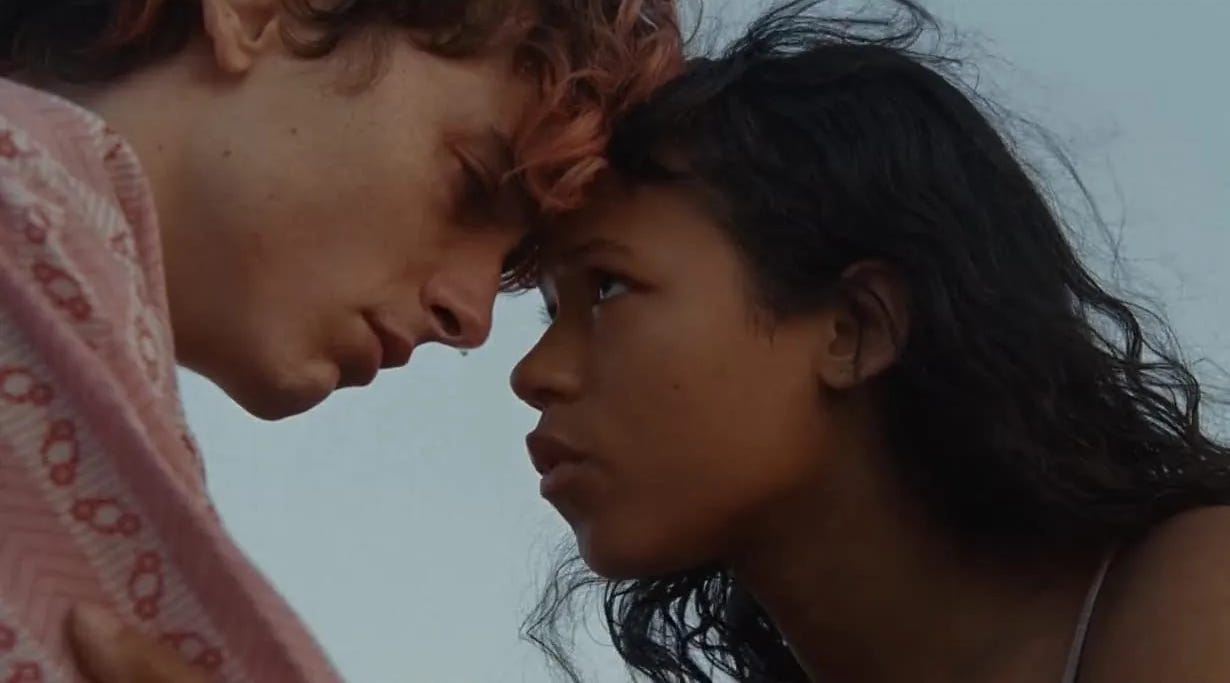
In contrast to Sully’s obsession, the bond between Maren and Lee is built on the rare intimacy of being truly seen. They do not turn away from each other’s darkest truths but meet them with understanding.
Their relationship allows them to see each other for who they truly are, beyond their monstrous tendencies. Their connection is not about erasing their hunger or pretending to be something they are not. It is about knowing someone else carries the same weight and still choosing to stay.
When Lee says, “Let’s be normal people for a while,” it is not just a longing for a temporary break from violence; it is an expression of their desire for peace and acceptance, to exist in a moment where their actions do not define them.
Maren’s simple confession, “All I think is that I love you,” carries the same weight. It is delicate and heartfelt, as if to say,
Despite everything you’ve told me, despite the darkness you carry, all I feel is love. It rushes through me so loudly, it drowns out everything else. It beats even louder than the fear, the doubt, the past. It is all I can think about.
Her response, given after Lee breaks down in shame and asks, "You don't think I'm a bad person?" while confessing the painful truth about his father's fate, isn’t about excusing his past actions. Instead, it’s her way of showing that she sees him completely, in all his complexity. Just as he accepts all the parts of her that she struggles to face, she does the same for him.
She does not offer absolution, nor does he ask for it. Instead, her words are an acknowledgment, a quiet reassurance that even after witnessing him at his most vulnerable, she is still there.
Can love exist without being truly seen?
Their bond is grounded in a deep understanding, a shared vulnerability that allows them to dig beneath the surface of their cold-blooded actions, searching for warmth and tenderness in a place that the world has long since turned away from.
Together, they force each other to confront the demons that lurk beneath, the unknown horrors they have spent a lifetime running from. Their love, though shadowed by violence, is not born from cruelty. They find refuge and tenderness in each other, where words are soft, and comfort is freely given.
What sets them apart is not their violence but their willingness to be seen. They do not hide from each other the way they have learned to hide from the world. Instead, they hold up a mirror, reflecting back something neither of them has ever been shown: the possibility of being loved as they are.
While the world sees only their monstrous actions, Maren and Lee see each other as they are, broken, yes, but also human, worthy of care and understanding. Their vulnerability with one another shows the possibility of redemption, an opportunity for emotional healing that is absent from the world around them.
to be consumed, to be loved
the symbolism of “bones and all”
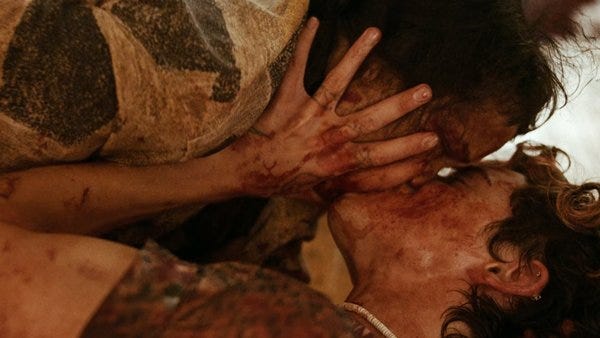
The moment when Lee says, “I want you to eat me. I want you to feed! Bones and all!” represents a culmination of their shared trauma and emotional hunger. This request is not just about physical consumption but a plea for complete acceptance, of both the love and the pain they carry. The phrase “bones and all” symbolizes the totality of their brokenness, urging Maren to accept all parts of him, the violence, the pain, and the trauma.
“I want you to do it. This was always going to be it. Love me.” - Lee
An eater is not supposed to eat an eater.
It is a rule, an unspoken law that even the most desperate do not break. Yet here Lee is, offering himself to Maren, asking her to do the unthinkable. He knows what it will mean for her.
That in consuming him, she will cross a line she can never return from. That she will become the thing she has feared, the thing she has fought against the thing she hates most. But sometimes the beast needs feeding. Hunger does not disappear just because it is ignored. It lingers, festers, demands to be answered.
In this moment, love and destruction blur. For Maren, eating Lee is both an act of devotion and an act of grief. It is the closest they can come to becoming one.
By consuming him, she attempts to end the cycle of emotional hunger they both carry. However, this act does not provide the closure or peace she hopes for. The consumption of Lee highlights the tragic reality that their hunger cannot be truly satiated. Even in the most intimate act of love, the trauma and violence they have inherited remain.
While she hesitates, wanting to help him in a different way, he pulls her into his chest, holding her tightly and refusing to let go until she gives in. His grip is both a desperate plea for acceptance and a demand for her to fully embrace him, including the darkness and pain he carries.
Lee’s plea expresses a deep desire for their bond to transcend all limits, even life and death. By asking Maren to consume him “bones and all,” he is seeking a complete and eternal connection. His request for her to eat every part of him, his skin, lips, fingers, eyes, and heart, shows his longing to merge with her entirely. He wants to live inside her, to become a part of her, and for her to carry him with her forever.
This is not just about physical consumption, but about their identities becoming inseparable. Lee wants their love to endure beyond the boundaries of life and death, to stay alive in her even after he’s gone. His request is a powerful expression of love and the desire to be loved completely, to exist together in a way that is beyond what the world can offer.
This act speaks to the rawness of their connection, to the messiness of loving something so broken, so beautiful in its imperfection. It call backs to Atticus Ross and Trent Reznor's song, "(You Made It Feel Like) Home," with the line, “When I can feel you beating inside of me, I have everything I need.”
It is worth the pain, worth the mess, because in their shared bond, they find something that the world has denied them: a love so pure, so rare, that it is almost sacred. The possibility of being loved completely, without condition or shame. A love that must be consumed because it cannot be contained.
A love that must be consumed because it cannot be contained.
memento mori
facing mortality and the self

In Bones and All, the relationship between Maren and Lee is a journey through trauma, emotional hunger, and the desire for normalcy. Their connection represents both a yearning for peace and a recognition of the cyclical nature of their pain. While their violent actions are symbolic of the emotional void they carry, their bond offers the possibility of healing through love and acceptance.
Despite the tragic reality that their hunger for connection may never be fully satisfied, their relationship demonstrates that love, even in its most flawed and broken forms, can be a path to redemption, where they can briefly be “normal people” without the weight of their monstrous pasts
The film encourages the audience to reflect on the traumas and emotional wounds inherited, the monsters carried with no instructions on how to manage them. It explores how these internal struggles deeply shape an individual, much like Maren and Lee’s violent hunger.
However, these monsters don’t always manifest as extreme as cannibalism. Instead, they can appear as unresolved grief, crippling anxiety, toxic relationships, or self-doubt. These are the monsters that linger beneath the surface, influencing thoughts and actions, often without full awareness of their weight.
The real fear explored in Bones and All is not just about the external world, but about what lies inside. The fear that is experienced often comes from within, an internal struggle shaped by the traumas inherited and the monsters created. The film shows how people tend to build walls around these fears, constructing a prison of their own making.
Though it may be called home, it ultimately confines and isolates. A mind shaped by pain and neglect knows nothing of delicacy or kindness, leaving an ongoing battle against the darkness within. These internal monsters are insatiable, feeding on the deepest vulnerabilities and devouring from the inside out.
Bones and All teaches that while the monsters we inherit may never fully disappear, they do not have to define us. The groundless fear of the self often leads to the belief that we are nothing more than a collection of blood and bones, consumed by the darkness inside.
Yet, through connection, whether in the form of love, understanding, or acceptance, it’s possible to confront these monsters, not by erasing them, but by learning to live with them. Despite the darkness, there remains hope for growth and redemption.
⋆𐙚₊˚⊹♡
bones and all is hands down my favourite movie, and i’m always pushing back against the idea that it’s just about cannibalism and horror. it’s so much deeper. it’s this beautifully tender exploration of love and raw intimacy. there are layers, complexities, and messiness to it all, and that’s what makes it so special.
i’d love to hear what you think, how it made you feel, or if you’ve got any movie recommendations i should dive into! and if you liked it, please subscribe…it’s literally free!!!
- salma <3
great write up! I watched it last night and was haunting mesmerised!